

The JMP Take: The Mining Infrastructure Trade Behind the Metals Bull Market
Mining and exploration service providers are jammed with new business following record 2025 financings driven by the metals bull market. Plus a microcap service provider poised to leverage this wave.
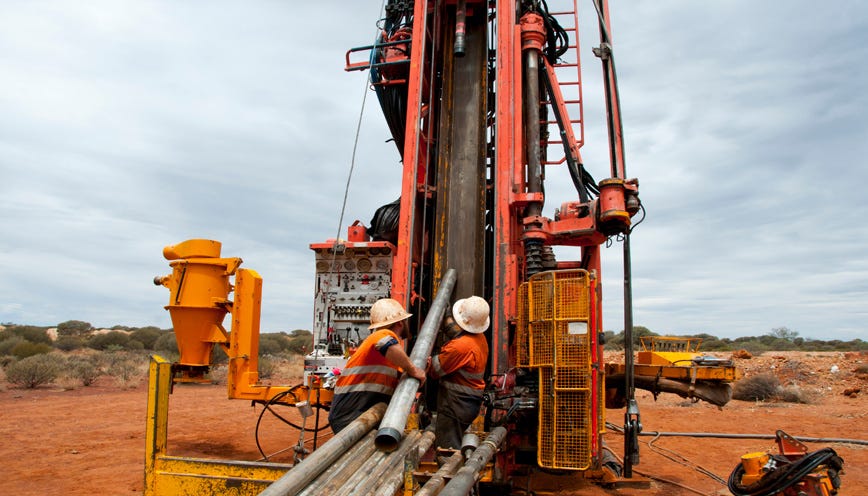
In today’s JMP Take we’re stepping back from individual juniors to look at the companies that make mining actually work.
Armed with record financings, mining companies aren’t the only beneficiaries of a developing metals bull market.
Mining’s next leg up is also about who drills, assays, and equips deposits, not just who finds them, and the question is whether the service rally has more room to run.
tl;dr
Policy and geopolitics are pushing more projects through permitting, while metals prices and record sector financings have reopened the spending spigot.
If gold, copper, uranium and other key metals can hold roughly current levels, last year’s record financing wave should translate into another year of heavy project funding and surging demand for drilling, assaying, and mine infrastructure.
This report covers key players, where they are positioned in the services ecosystem and also includes a booming microcap service provider positioned to leverage increased spending and activity on the field.
Need to know in 30 seconds
FAST‑41 : Fifty mining and critical mineral projects now sit on the Federal Permitting Dashboard, most added since Trump’s March 2025 “Immediate Measures to Increase American Mineral Production” order, with a political mandate to cut permitting timelines from decades to a few years.
China’s rare earth and critical mineral export controls are suspended until late 2026. If controls snap back, Western governments will have even more incentive to push domestic projects from financing into drilling, development, and construction.
TSX/TSXV mining financings reached 1,429 deals and C$16B in 2025, up from C$10.4B in 2024 and C$7.6B in 2023. If gold, copper, uranium and the broader metals complex can roughly hold today’s levels, that capital is set to convert into more meters drilled, more samples assayed, and record mine infrastructure built this year and next.
Service Market size and growth
Driven by these tailwinds the global mining drilling services market is expected to grow roughly 5–7% annually this decade, from about US$3–4B today to US$4–6B+ by 2030–2034, while mining equipment grows ~4–5% annually from >US$60B to >US$80B by 2030.
Why now
The U.S. response to China’s willingness to weaponize critical minerals has been to marry permitting reform (via FAST‑41), DPA‑backed funding, and direct equity stakes in key processing and magnet projects.
Converging with this, and the global race to secure and build new mines, commodities look like they’re in an early to mid stage bull cycle.
TSX/TSXV financings confirm that capital has returned to the sector, especially in the second half of 2025.
As a result, major drillers are printing record or near‑record revenue and ramping crews.
OEMs are working through record backlogs. Labs are starting to stretch turnaround times in the hottest jurisdictions.
The drillers
Major Drilling (TSX: MDI) is the reference name for exploration services. At roughly US$1.38B market cap and about +85% over 12 months. Q2 FY26 revenue reached C$244.1M, up 29% year‑on‑year, the highest quarterly revenue in its 45‑year history. Management is deliberately investing in crews and fleet readiness ahead of what they describe as a “busier calendar 2026.”
Foraco (TSX: FAR) offers a smaller, more volatile way to play the same underlying trend. With a market cap near US$314M and trailing revenue in the C$250M range, Foraco runs an international drilling business covering mineral and water drilling across several continents. The stock is up roughly 60% over 12 months, reflecting the early phase of a re‑rating as exploration spend improves.
Capital Limited (LSE: CAPD) sits between the majors and the microcaps. At roughly £320M market cap and up more than 80% over the last 12 months, Capital runs a broader mining services platform that combines drilling, load‑and‑haul mining services, and its MSALABS geochemical lab business, focused on Africa with a growing global footprint. Full‑year 2025 revenue of about US$346M came in at record performance, and the stock offers a modest dividend alongside that growth. It’s an interesting way to play upside in drilling and mine services in higher‑risk, less developed jurisdictions, but you are taking on more country and contract risk in exchange.
The labs
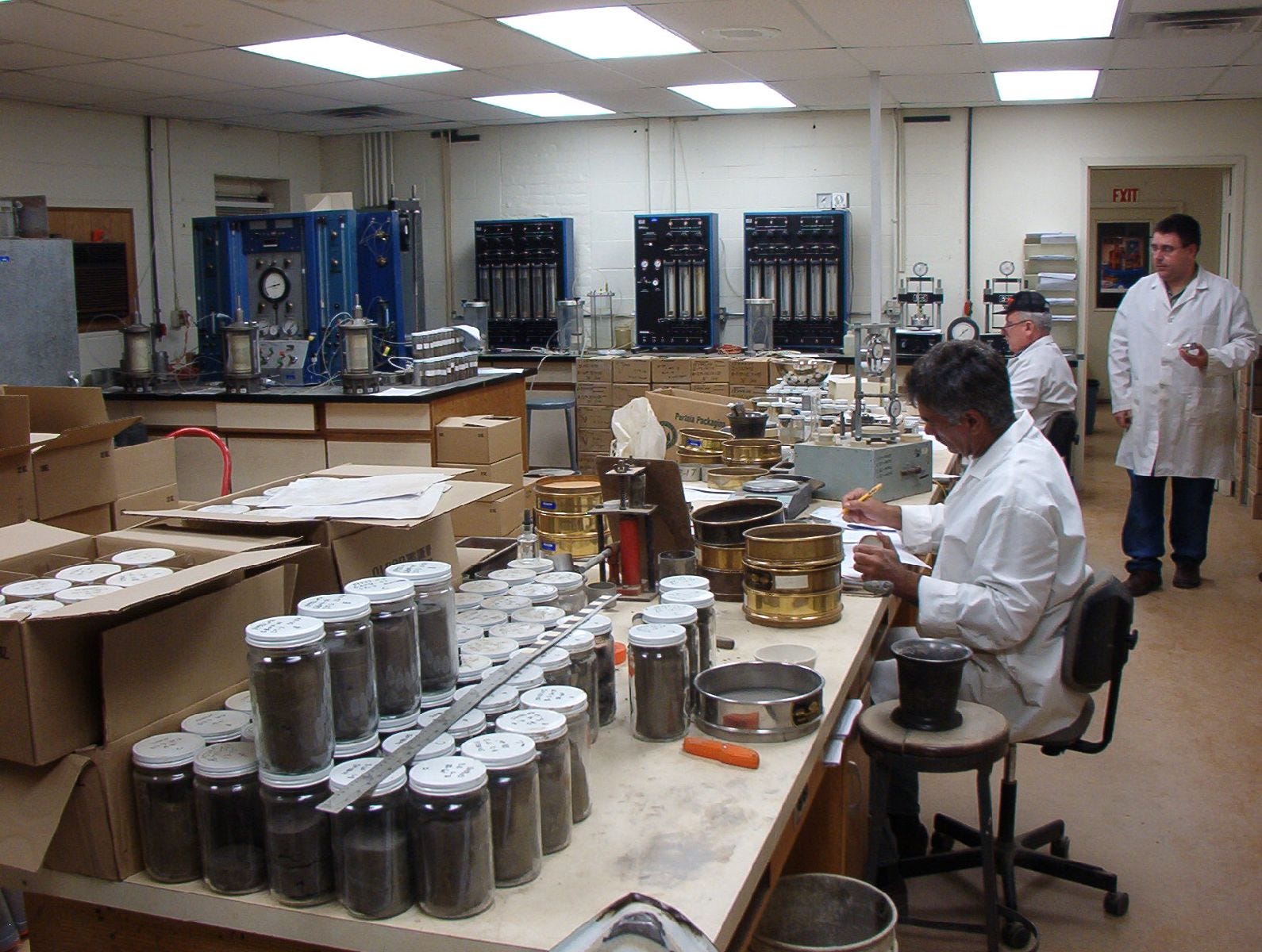
When cycles heat up, labs either make more money or start to choke; or both.
SGS (SIX: SGSN, $93.98) is the dominant player covering geochemistry, metallurgy, and bulk commodities testing. It runs about 2,600 offices and labs globally and has a market cap around US$18.1B. Despite the improving mining backdrop, the equity has been roughly flat in USD terms over the past year, reflecting its diversified revenue base and generalist shareholder base. SGSN has a forward dividend and yield of ~$3.40.
Bureau Veritas (EPA: BVI) is a similar story at a smaller scale. With a market cap around US$12.2B, a dividend yield of ~3.28%, and a strong presence in metals and minerals inspection in Africa and the Middle East, it is well positioned for more exploration and development activity in high‑growth regions.
Those looking for large-scale equities to compliment their mining services segment would buy SGS and Bureau Veritas for stable cash flow and a 3–4% dividend, not for 3–5x upside.
They provide defensive, income‑oriented exposure to mining services, while drillers like MDI/FAR carry the true cycle torque.
The equipment OEMs
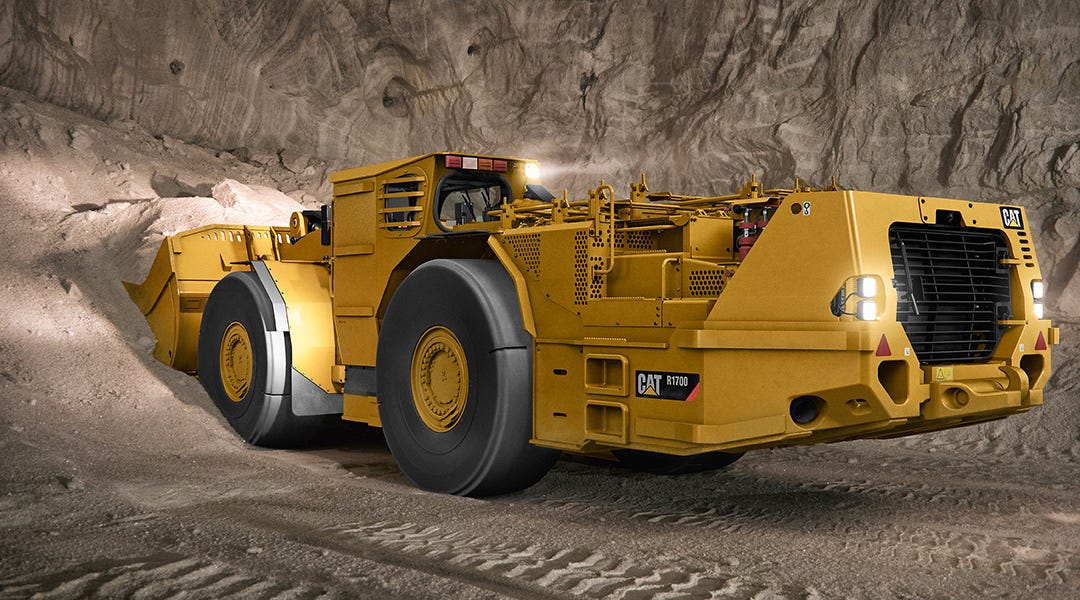
Caterpillar (NYSE: CAT, $759) the industry behemoth is up an astounding 117% in the last 12 months. CAT is experiencing significant growth, driven by demand in its Power & Energy unit, which reported a 23% increase in revenue. Hedge funds are increasing their positions in the company, and Bank of America has raised its price target to $825 amid strong market performance and backlog growth.
Sandvik (STO: SAND) and Epiroc (STO: EPI‑A) are the more focused OEMs.
Sandvik, at ~US$45–47B equivalent market cap, is central in rock tools and battery‑electric underground fleets, including the BEV order at South32’s Hermosa project.
Epiroc, at ~US$23–25B and up ~18% over 12 months, is the pure‑play mining OEM with 11% organic order growth in Q4 2025, SEK 62B revenue, and a 19.6% operating margin, pushing hard into autonomy and diesel‑to‑battery conversions.
To anchor a mining‑services bucket, Epiroc seems to be the more focused choice; CAT is the safer but broader one.
A brief note on water in mining
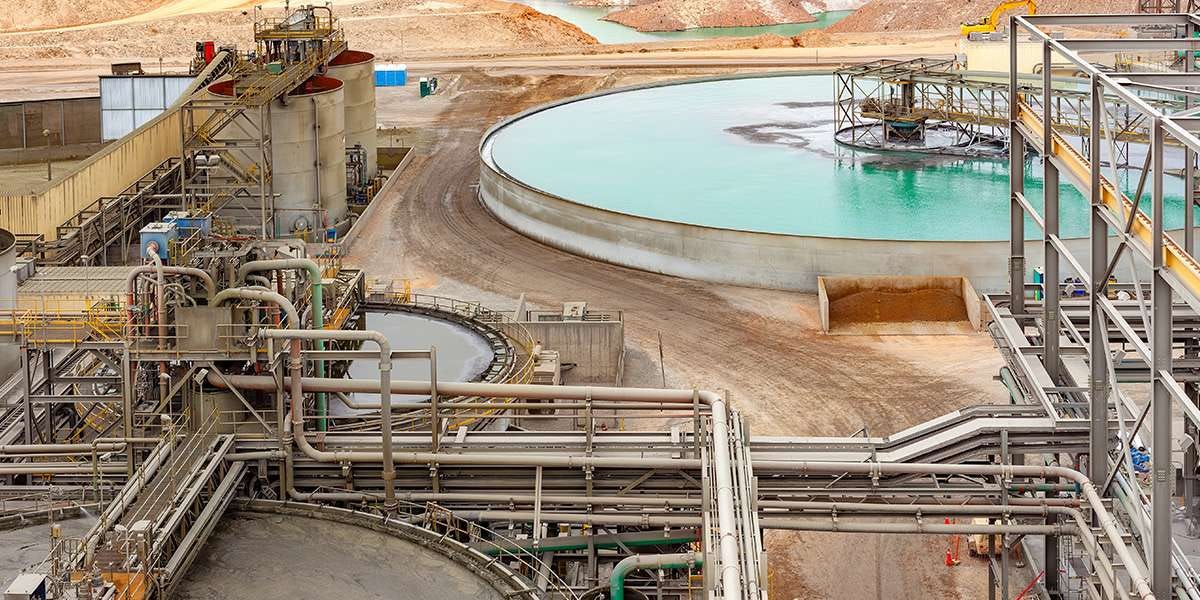
You cannot run a modern mine without water.
Dewatering, process water, tailings management, and community supply all require pumping, treatment, and monitoring systems that are getting more capital‑intensive as environmental standards tighten.
Names like Xylem (XYL) and Pentair (PNR) sit on the hardware and infrastructure side, supplying pumps, filtration, and treatment systems into industrial and mining applications.
Tetra Tech (TTEK) and Veralto (VLTO) lean more toward engineering, consulting, analytics, and water‑quality technologies that help miners design, permit, and operate water‑intensive projects.
For readers who want a lower‑risk overlay, a position in a water technology name or ETF can complement the core picks‑and‑shovels sleeve by adding exposure to the “water constraint” theme without diving into more microcaps.
The “Invisible” Infrastructure Play for the Coming Bull Run
The real wealth in the next cycle will be found in the machines that get into the dirt.
The next section, exclusive to premium Junior Mining Pro members, breaks down an established service provider that:
Maintains a large footprint in the world’s most prolific gold and copper belts, with a client list that lists many major producers.
Owns and maintains a diversified, high-spec hardware portfolio capable of executing the most technically demanding programs on the market.
Despite a record-setting backlog and a balance sheet fortified with cash, the market currently assigns this company a valuation not accounting for anticipated record developer spend in the coming 12-24 months.
With significant latent capacity ready to be deployed as junior financings tick up, this company is essentially a “coiled spring” for the 2026/2027 exploration cycle.
In the full report, we dive into:
The specific “picket fence” jurisdictions providing a safety net for current operations.
An analysis of current utilization rates vs. peak-cycle earnings potential.
The exact price targets for our Base, Bull, and Blue-Sky scenarios.
Why the “replacement value” of their fleet alone makes the current share price look undervalued.
